
The Complete Guide to Building a New House in New Jersey
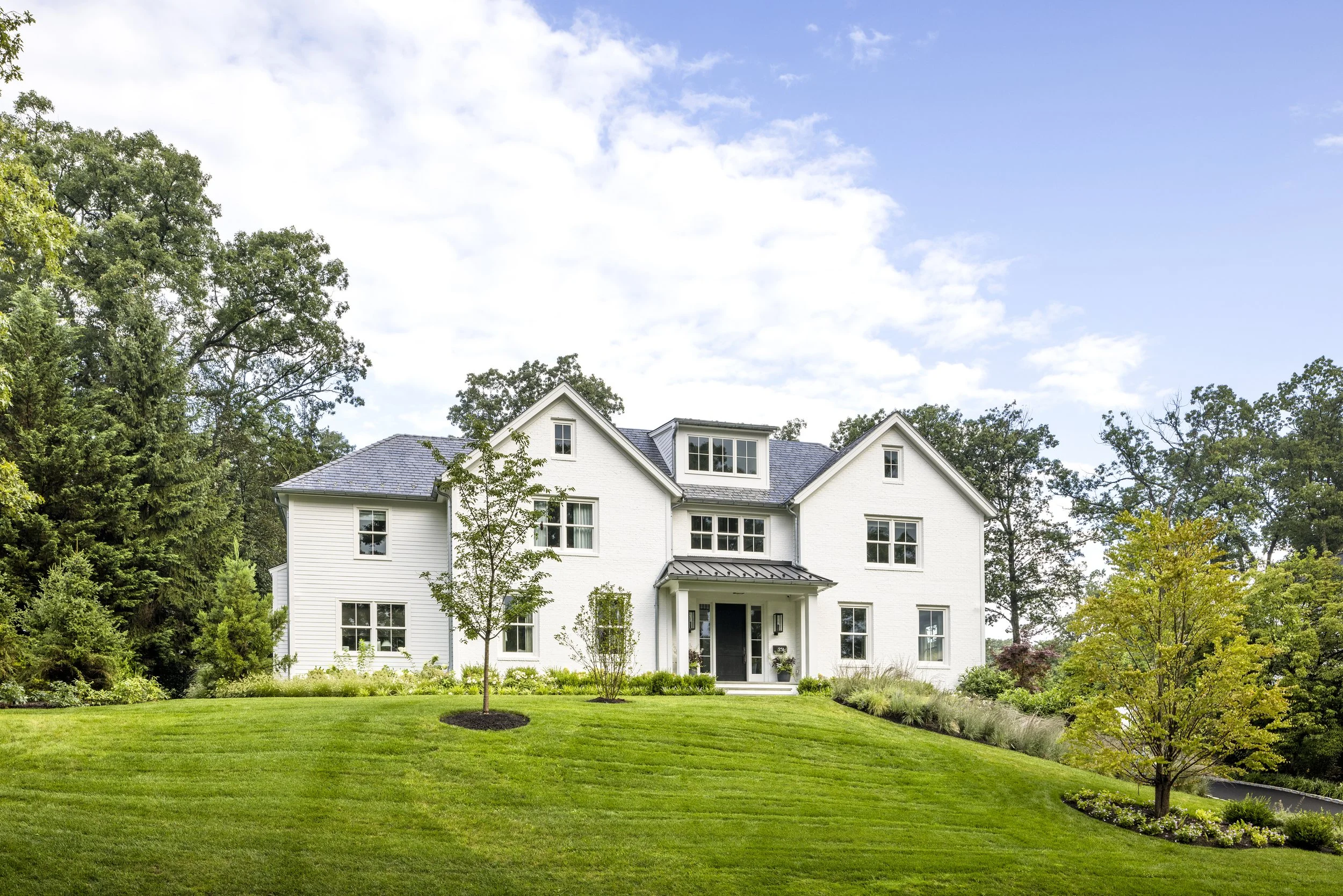
This is a new home that JJA designed on Oak Ridge Avenue in Summit, NJ.
A step-by-step resource for homeowners ready to build their dream home in NJ
Building a custom home in New Jersey is one of the most significant and rewarding investments you can make. It's also one of the most complex. Between navigating municipal zoning boards, managing construction loans, selecting the right contractor, and understanding state-specific regulations like CAFRA on the Jersey Shore, the path from empty lot to finished home is filled with decisions that will shape how you live for decades to come.
This guide walks you through every major phase of the process — from budgeting and land selection to punch list and certificate of occupancy — so you can move forward with clarity and confidence.
________________________________________
How Much Does It Cost to Build a House in New Jersey?
Before anything else, understand the numbers. In New Jersey, custom home construction typically costs $300 to $600+ per square foot, depending on the complexity of the design, quality of materials, site conditions, and location. High-end and architecturally custom homes — particularly in Bergen County, Morris County, or the Jersey Shore communities — can reach $600 to $800+ per square foot.
A few key cost drivers to keep in mind:
• Materials account for roughly 50–60% of your total build cost
• Labor in northern New Jersey and shore communities commands a premium over national averages
• Land averages $242,900 per acre statewide — but prime lots in towns like Summit, Short Hills and along the shore can far exceed this
• Site work — clearing, grading, utilities, and foundation — can add $50,000–$150,000 before a single wall goes up
• Permits, engineering, and design fees typically add 10–15% on top of hard construction costs
Always build in a 10% contingency buffer for change orders, material price shifts, and weather delays. Building in flood-prone or coastal areas warrants an even larger cushion.
________________________________________
Financing Your New Home Build
Financing a custom home is different from getting a traditional mortgage. Most people use one of two approaches:
Construction-to-Permanent Loan — The most common choice. A single loan funds your construction and automatically converts to a 30-year mortgage when your certificate of occupancy is issued. You lock in your interest rate upfront, pay interest-only on draws during construction, and avoid a second closing. This is the cleanest path for most custom home clients.
Construction-Only Loan — A short-term loan (typically 6–18 months) that covers just the build, after which you apply for a separate permanent mortgage. More flexibility, but also more steps and closing costs.
Land + Construction Loan — If you haven't secured a lot yet, some lenders will package the land purchase and construction into one loan.
Lenders treat construction loans as higher risk, so expect stricter qualification requirements: a credit score of 680+, a down payment of 20% or more, detailed architectural plans, a cost breakdown, and a vetted general contractor. Working with an architect from the outset — before approaching lenders — puts you in a significantly stronger position.
Valley Bank and TD Bank are well known their experience lending to homeowners building a ground-up home. See the links below to the teams which typically handle this lending work:
https://www.valley.com/personal/lending-and-mortgages/residential-mortgage/buy-a-home/construction
https://www.td.com/us/en/personal-banking/mortgage/build-a-home
________________________________________
Finding and Selecting Land
The right lot is the foundation of everything that follows. In New Jersey, buildable land is scarce, particularly in desirable North Jersey suburbs — communities like Summit, Short Hills, Harding, Bernardsville, Far Hills, Rumson, and Montclair have long attracted buyers seeking custom homes on well-established lots. Most new construction here happens through teardowns: purchasing an existing home, demolishing it, and rebuilding. Along the Shore, high-end communities like Avalon, Spring Lake, Mantoloking, Bay Head, and Sea Girt follow the same pattern, with oceanfront and bayfront teardowns commanding significant premiums.
When evaluating a lot, consider:
• Topography and drainage — Steep grades and poor drainage dramatically increase site prep costs
• Flood zone status — Check FEMA flood maps. Building in an AE or VE flood zone requires elevated construction, flood insurance, and often NJDEP permits
• Utility access — Is public sewer and water available, or will you need a well and septic? Septic systems require soil percolation testing and DEP approval
• Deed restrictions and HOA rules — Some lots carry easements or covenants that restrict building size, style, or materials
• Proximity to wetlands — NJ's Freshwater Wetlands Protection Act creates 50–300 ft buffer zones around wetland areas
An architect and civil engineer reviewing a lot before you close on it can save you from a costly mistake.
________________________________________
Understanding Zoning in New Jersey
New Jersey has 564 municipalities, each with its own zoning ordinance. Before you design a single room, you need to understand what your municipality allows on your lot.
Zoning governs:
• Permitted use — Is residential construction allowed on this parcel?
• Setbacks — How far must the house sit from property lines, streets, and wetlands?
• Maximum lot coverage — What percentage of the lot can be covered by the building footprint and impervious surfaces?
• Height limits — How tall can the structure be?
• FAR (Floor Area Ratio) — Some towns cap total square footage relative to lot size
If your design requires deviating from these standards, you'll need a variance from the local Zoning Board of Adjustment — a process that can add 3–6 months (or more) to your timeline. An experienced architect familiar with local boards can anticipate these issues in early design and help craft a compelling application when variances are needed.
________________________________________
Site Planning
Site planning is the process of determining how your home will be positioned on the lot — and it's far more strategic than it sounds. A well-planned site:
• Maximizes solar orientation for natural light and energy efficiency
• Respects natural grades to minimize excavation costs
• Accounts for driveway access, drainage, and utility runs
• Preserves mature trees (some municipalities require tree permits to remove them)
• Addresses stormwater management, which NJ's environmental regulations take seriously
For shore properties, CAFRA (the Coastal Area Facility Review Act) adds another layer. The NJDEP regulates development within the coastal zone — generally 1,000 feet landward from the mean high-water line south of the Manasquan Inlet. While single-family homes have historically had more flexibility under CAFRA than larger developments, proximity to beaches, dunes, or tidal waters can trigger individual permit requirements and design constraints around impervious coverage and stormwater.
________________________________________
Programming Your Home
Programming is the process of defining what your home needs to contain — before design begins. Think of it as your home's brief. A thorough program answers:
• How many bedrooms and bathrooms?
• Do you want a formal living room? Formal dining? Or open-plan living throughout?
• Home office — one or two? Remote work needs?
• Mudroom with built-in storage? Butler's pantry?
• Garage: one-, two-, or three-car? Attached or detached?
• Outdoor living: covered porch, deck, pool, outdoor kitchen?
• Basement: finished, unfinished, or walk-out? Golf Simulator? Gym? Legal Bedroom?
• Future needs: aging-in-place features, au pair suite, home gym?
The more clearly you articulate your needs at this stage, the more precisely your architect can design to your life — and your budget. Scope creep mid-construction is one of the most common drivers of cost overruns.
________________________________________
Architectural Style, Layout, and Facade Design
This is where the vision becomes form. New Jersey's architectural landscape is rich and varied — from the classic shingle-style colonials of Bergen County to the coastal cottages and cedar-clad beach houses of the Shore. Your architect's job is to create a home that reflects your aesthetic while responding to the site, the neighborhood context, and your program.
Key considerations during design:
• Style: Traditional, transitional, modern, coastal, farmhouse? Your architect should help you articulate a clear design direction so every decision reinforces a coherent vision
• Layout: How rooms flow from one to the next — adjacency of kitchen to outdoor dining, master suite separation from kids' rooms, sight lines and natural light — defines how you'll live in the home daily
• Facade materials: In NJ, common choices include fiber cement siding, natural cedar, brick, stucco, and stone. Shore homes often call for materials that withstand salt air and humidity. North Jersey homes may prioritize insulation values for colder winters. The minimum insulation requirements per NJ construction code are restrictive and require R-30 in the walls and R-60 in the ceiling (a very thick amount of insulation). Your architect will help you balance aesthetics, longevity, maintenance requirements, and budget
• Roof materials: In NJ, the choices typically include, slate, simulated slate (Da Vinci makes a nice option), cedar, standing seam metal (copper, aluminum, zinc, etc.) and asphalt. Each has a different cost and maintenance profile that should be considered.
• Roof form and fenestration: These are among the most powerful design tools — and among the most expensive to change after the fact
Great architecture integrates all of these decisions into a whole that feels inevitable.
________________________________________
Interior Design and Materials
Interior selections — flooring, cabinetry, countertops, tile, plumbing fixtures, hardware, lighting — can represent 20–30% of your total construction budget. These decisions also take time. Lead times on custom cabinetry, stone slabs, and specialty tile can run 12–16 weeks, so selections must be made well before you need them on-site.
A coordinated approach, with your architect guiding interior selections alongside exterior design, ensures the home reads as a single cohesive vision rather than a collection of showroom impulse buys. This is one of the clearest advantages of a full-service architectural relationship.
________________________________________
Your Project Team: Key Consultants to Hire
A custom home requires more than just an architect and a contractor. Depending on your site and scope, you'll likely need a team of licensed consultants working in coordination. The core players:
Licensed New Jersey Architect — Your architect is the project quarterback. They develop the design, produce construction documents, coordinate with other consultants, navigate zoning and permitting, and represent your interests during construction. In New Jersey, construction documents for a new single-family home must be prepared and stamped by a licensed architect or engineer. Hiring one from the start — not as an afterthought — saves time, money, and frustration across every phase.
Civil Engineer — Responsible for the site plan: grading, drainage, stormwater management, utility connections, and any required septic design. In NJ, most municipalities require a stamped civil site plan as part of the permit application. If your lot is in a flood zone, near wetlands, or in the CAFRA coastal zone, your civil engineer will also manage the DEP permitting process. Choose one with experience in your specific municipality — local relationships with the engineering department matter.
Interior Designer — While your architect will drive overall interior concepts and material coordination, a dedicated interior designer adds value for clients who want a deeply considered approach to furnishings, window treatments, art placement, and finish details beyond the scope of construction documents. The best results come when the architect and interior designer work as a coordinated team from early design onward, not in sequence.
Additional consultants you may need depending on your project include a structural engineer, MEP (mechanical/electrical/plumbing) engineer for complex systems, landscape architect, lighting designer, and audio/visual or home automation consultant.
________________________________________
Hiring a General Contractor
Your general contractor (GC) manages day-to-day construction, hires and coordinates subcontractors, procures materials, and is responsible for delivering a home that matches the architect's drawings and specifications. Choosing the right GC is as important as any design decision.
What to look for:
• NJ licensed and insured — Verify their Home Improvement Contractor (HIC) registration with the NJ Division of Consumer Affairs
• Experience with custom homes — Not just production builders or renovation contractors
• Local relationships — A GC with strong ties to NJ subcontractors and suppliers can mean better pricing and reliable scheduling
• Transparency in bidding — Request detailed line-item bids, not lump sums. Understand what's included and what's an allowance
• Strong references — Speak to past clients. Ask specifically about how the contractor handled problems, not just how the finished home looks
Your architect can help you develop a thorough bid package, evaluate proposals on an apples-to-apples basis, and serve as your advocate throughout construction.
In terms of how you work with the GC, you can hire them prior to design, to consult on the design prior to construction. In this arrangement, the GC is typically paid a fixed mark-up on the construction costs (likely in the range of 15%-25%).
Alternatively, your architect can host a bid process and have multiple contractors bid on the work once the Construction Documents have been drawn. This helps ensure you pay a fair price but involves less service during the design phase.
________________________________________
Project Schedule: How Long Does It Take to Build a Custom Home in NJ?
One of the most common questions clients ask is: how long will this take? A realistic schedule for a custom home in New Jersey looks like this:
Phase Typical Duration
Design (schematic through construction documents) ~5 months
Bidding and contractor selection ~1 month
Permitting ~1 month (longer if variances are required)
Construction 10–14 months depending on size and complexity
Total ~17–21 months from design start to move-in
A few important notes. The design phase can be shorter for clients who arrive with a clear vision and decisive input, or longer for complex programs or challenging sites. Permitting timelines vary widely by municipality — towns that require zoning board variances can add 3–6 months to that column alone. And construction duration scales with square footage, finish level, and site complexity: a 4,000 sq ft home on a straightforward lot will deliver faster than a 7,000 sq ft home on a steeply graded or flood-zone lot.
Plan for the full range. Clients who budget time as carefully as they budget dollars move through the process with far less stress.
________________________________________
Permitting in New Jersey
New Jersey's permitting process operates under the Uniform Construction Code (UCC), administered by the local Construction Official. For a new single-family home, you'll typically need:
• Zoning permit — Confirming the proposed structure meets local zoning ordinances
• Building permit — Covering structural, architectural, and general construction
• Electrical, plumbing, and mechanical sub-permits — Each trade requires its own permit and inspection
• Site plan approval — Required in many municipalities for new construction
• DEP permits — Required if your site involves wetlands, flood zones, or the CAFRA coastal zone
In most NJ municipalities, permit review for a new custom home takes 6–12 weeks, though towns vary widely. Municipalities that require in-person submissions — and NJ has more of these than most states — can add time. If your project requires variance approval, add 3–6 months for the board process.
Having complete, code-compliant construction documents prepared by a licensed architect is the single most effective way to minimize permitting delays.
________________________________________
Construction
Once permits are in hand, construction typically takes 12–18 months for a custom home in New Jersey. The general sequence:
1. Site work and foundation — Excavation, footings, foundation walls, waterproofing
2. Framing — Structure, sheathing, windows and exterior doors
3. Rough mechanicals — Plumbing, HVAC, electrical rough-in
4. Insulation and drywall
5. Interior finishes — Flooring, cabinetry, tile, paint
6. Trim, fixtures, and final mechanicals
7. Site work completion — Driveway, landscaping, final grading
Throughout construction, your architect should conduct periodic site visits to verify work conforms to the drawings and specifications — catching issues early, before they become expensive corrections.
________________________________________
Inspections and Sign-Offs
As construction progresses, the municipality's Construction Official and subcode inspectors will conduct mandatory inspections at key milestones — foundation, framing, rough mechanicals, insulation, and final inspections for each trade. All inspections must pass before work can proceed to the next phase.
At completion, you'll receive a Certificate of Occupancy (CO), which confirms the home has been built in accordance with approved permits and is safe to occupy. You cannot legally occupy the home without a CO — and your lender won't fund the final mortgage conversion without it.
________________________________________
The Punch List
Before you take occupancy, your architect will conduct a detailed punch list inspection — a systematic walk-through of the completed home documenting every item that needs to be corrected, adjusted, or completed. This might include paint touch-ups, improperly hung doors, missing hardware, tile grout inconsistencies, or mechanical items that haven't been commissioned properly.
A thorough punch list protects you. It establishes a written record of outstanding items and creates accountability for your contractor before final payment is released. This is one of the most valuable services your architect provides in the final stretch.
________________________________________
Frequently Asked Questions: Building a Custom Home in New Jersey
Do I need an architect to build a custom home in New Jersey? Yes — and not just technically. New Jersey requires construction documents for a new home to be prepared and stamped by a licensed architect or engineer. But beyond the legal requirement, an architect adds value at every phase: protecting you from costly lot mistakes, designing a home that fits your life and budget, navigating zoning and permitting, and managing construction quality. Clients who engage an architect early consistently achieve better outcomes than those who try to go directly to a contractor.
Can I build a new home in NJ without buying raw land? Most custom homes in the markets we serve — Summit, Short Hills, Rumson, Avalon, Spring Lake, and similar communities — are teardown-rebuilds. You purchase an existing home (often one that's dated or undersized for the lot), demolish it, and build new. True vacant lots in these areas are rare. Your architect can evaluate whether an existing structure is worth renovating or a teardown makes more financial sense.
What is CAFRA and does it affect my Shore home build? CAFRA (the Coastal Area Facility Review Act) is a New Jersey state law that governs development in the coastal zone, generally within 1,000 feet of tidal waters south of the Manasquan Inlet. If you're building in communities like Avalon, Spring Lake, Bay Head, or Mantoloking, CAFRA regulations will likely affect your project — governing impervious coverage, stormwater management, and in some cases requiring NJDEP permits. An architect experienced with Shore builds will navigate this as a matter of course.
How much should I budget for design and professional fees? Architectural, engineering, and consultant fees for a custom home in New Jersey typically run 8–15% of construction cost, depending on the scope and complexity of the project. This is not a cost to minimize — well-developed design and construction documents directly reduce change orders, contractor confusion, and expensive mid-construction surprises. Think of professional fees as the best insurance you can buy on a multi-million dollar project.
What's the difference between a variance and a permit? A permit is an approval issued by the municipal Construction Office confirming that your proposed construction complies with the building code and your approved plans. A variance is an approval from the Zoning Board of Adjustment allowing your project to deviate from the municipality's zoning ordinance — for example, a reduced setback or increased lot coverage. Permits are relatively routine; variances require a public hearing and board vote, and can add months to your timeline. Your architect will identify variance needs early and advise on whether to pursue them or redesign to avoid them.
Should I hire a contractor before or after completing the design? After — or at least after schematic design is complete. Hiring a contractor before you have drawings is like asking someone to price a trip before you've chosen a destination. You want competitive bids based on complete construction documents so you can compare apples to apples. That said, some clients bring a contractor into the conversation during design for early budget feedback, which can be valuable — just make sure your architect leads the process.
Can I make changes during construction? Yes, but expect them to cost more than they would have in design. Changes during construction — called change orders — require the contractor to stop work, re-price the item, and potentially undo work already done. The earlier in the process you make a decision, the less it costs to change. This is one of the strongest arguments for investing in thorough design upfront.
________________________________________
Why Work With an Architect From the Start?
Building a custom home in New Jersey involves hundreds of decisions, a half-dozen regulatory approvals, and coordination among a dozen or more contractors and consultants. The homeowners who navigate it most successfully — on time, on budget, and with a home they love — are the ones who engaged an architect early and maintained that relationship through construction.
At John James Architecture, we bring deep knowledge of North Jersey and Shore community zoning boards, permitting offices, and the unique site conditions that define building in this state. We design homes with a clear aesthetic vision and an exacting attention to craft — and we stay with our clients from the first sketch to the final walk-through.
________________________________________
Ready to start planning your new home?
Schedule a Consultation with John James Architecture — and let's talk about what's possible. Please submit the form below to schedule a consultation. We typically respond in an hour or two.
John James Architecture LLC is a licensed architecture firm serving clients throughout New Jersey, with particular expertise in residential design in North Jersey suburbs and Shore communities.